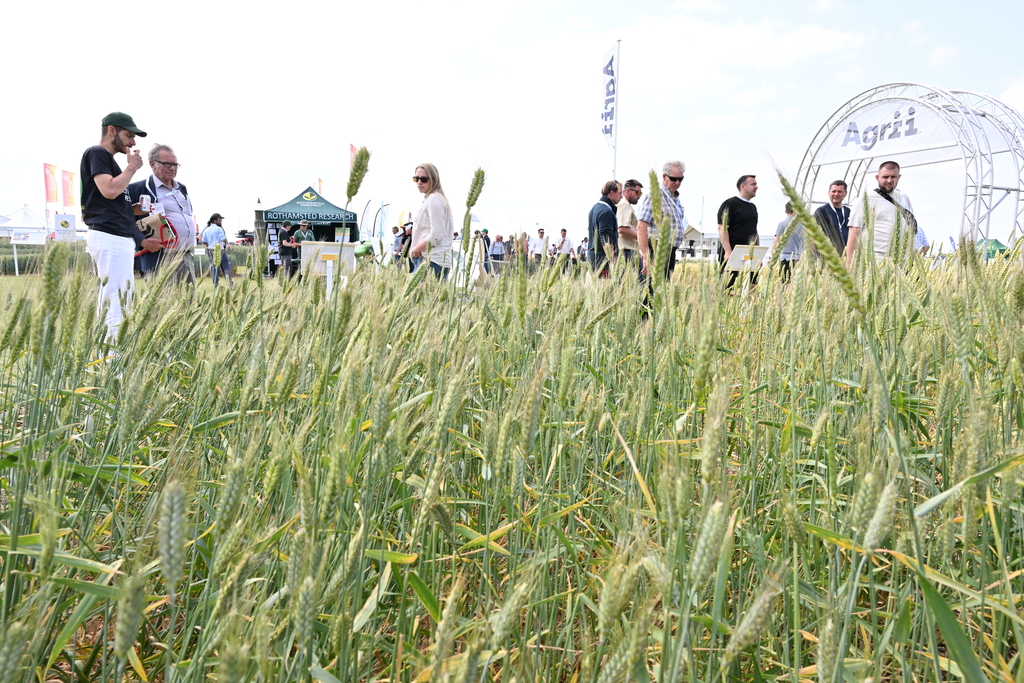
While some fear how the crop plots will be performing in the Cotswold Brash soil when the Cereals Event opens at Diddly Squat Farm in June this year, BOFIN’s Tom Allen-Stevens is optimistic.
Tom, who is an agricultural innovator, journalist and Oxfordshire farmer himself, says the move to Jeremy Clarkson’s farm is a “genius idea” by Cereals and will help to cast a greater spotlight on farming and the challenges the industry is facing.
He does admit growing in Cotswold Brash will be a challenge as it “isn’t the best soil” but argues the region has “brilliant farmers” who know how to develop the soils with organic matter and the strategic use of cover crops.
The crop plots for the event, taking place on June 10 and 11, are being managed by the Cereals team, along with Charlie Ireland and Kaleb Cooper, and Tom is hopeful that they will be able to showcase the best of the new varieties.
Tom Allen-Stevens is the founder of BOFIN (The British On-Farm Innovation Network) and will be at Cereals to launch the initial findings of a £2.2m three year, multi-partner trial of a “precision bred” wheat variety that is aiming to be a more drought resilient as well as discuss another multi-million project they are running to combat slugs.
With the heightened interest in the Cereals event from the “Clarkson effect”, Tom is also calling on the industry to “step up” and back farmers to research new crops, products and solutions.
He said: “I don’t think society, or the industry, actually realises the wealth of knowledge they have with pioneer farms. The value of the depth of research not taken up is a major problem. There is a fantastic body of farmers who do this research, but nobody supports them to do it. Nobody is bringing all of it together. That is what we want to do with BOFIN.
“It is time for the industry to step up. Cereals is a fantastic opportunity as farmers come to the event with their technical heads on. Companies already spend millions on small plot trials, but they should make sure they have enough budget to do farm trials as well.
“With farm trials, you are not only getting on-farm commercial applied results, but farm knowledge and expertise as well. What a great way to codevelop a product.”
Cereals will this year attract more than 25,000 farmers and over 650 exhibitors. It is a farmers-only event with all attendees being carefully vetted.
Highlights at Cereals in 2026, which is co-hosted by Freuhauf, will include an Agronomy Zone, informational and technical features like the Seed to Shelf Stage sponsored by KWS, the BASE-UK Regenerative Ag Stage sponsored by Tees Law, a Young Farmers Programme sponsored by
Michelmores, and the Syngenta & CropLife Sprays & Sprayers Arena and other working demonstrations.
This year will also see a new Livestock Zone sponsored by Nofence alongside an expanded Crop Protection & Nutrition area that will include Organic Agronomy.
BOFIN is a Cereals partner and was founded in 2020 by Tom Allen-Stevens to be a continually growing membership of farmers, scientists, researchers and citizen scientists carrying out projects, exploring new products and ways of working to make farming more sustainable and resilient.
Tom is involved in a farmers panel that is helping to shape what will be featured at the Cereals event, ensuring the range of talks, debates, displays and demonstrations deliver what is needed to help drive the industry forward.
He says the event being hosted at Diddly Squat is a “genius idea” and hails how Clarkson has brought the world of farming into the living rooms of the general public.
He adds: “As an Oxfordshire farmer, I am thrilled to bits Cereals is coming to Oxford. I have been going to Cereals on both days, each year, for most of my life. It is a great event. You have all that expertise on the right stands and know, as a farmer, you will get unique in-depth conversations.
“Jeremy Clarkson has made people aware of the challenges we all face. I don’t know how he does it, but he’s able to communicate the day-to-day issues for farmers in a way that puts a spotlight on it and engages people. He is a master at it.”
He did joke, however, there is one challenge for Cereals coming to Oxford, compared to previous locations in Lincolnshire and Cambridgeshire.
“We have got brilliant farmers but not the best soils,” he explains. “Cotswold Brash is silt, clay and full of stones. In some case the roots can’t get far because of the bedrock. Then when the sun comes out and everything dries up, the crops can be at risk because they might not have developed a proper root system.
“To get around it, I see farmers who have developed soils really well using cover crops and getting the right organic matter on to it, the right crop rotation. Farmers here know what they are doing and I’m sure we’ll see some good results at Cereals this year.”
Cereals farm manager Jonathan Backhouse is in charge of overseeing the crop plots but plays down any concerns about growing in Cotswold Brash. He explains: “The land is undoubtedly different to what we’re used to but any piece of land presents unique challenges and the crops are doing well.
“The winter crops have taken well and are coming along really nicely and we’re confident about the spring crops that are going in now. We know some people have been concerned about how well the crops will do in the Cotswold Brash but I’m confident we’ll have another great display this year.
“The only thing that has been unusual is the amount of attention we get. The plots are in view of the Diddly Squat farm shop and its been entertaining working the crop plots with hundreds of people watching.”
BOFIN is currently working on five projects and since its first project in 2022, BOFIN has secured more than £14m of funding from Defra and the Environment Agency. BOFIN also now works with
the likes of Rothamsted Research, John Innes Centre, UK Agri-Tech Centre, the University of Nottingham and Harper Adams University for example.
It was meeting farmers through journalism in the last 25 years which led to Tom setting up BOFIN. He said: “I have spent the last 25 years going around some of the best farms in the country. They talk about new ideas, things they are doing, and it is a real privilege to get that insight and share with other farmers.
“That is what led to BOFIN. I recognised a lot of farmers I visited were doing their own on field trials. They knew about small plot trials, and you get fantastic data from Agrii, ADHB and Hutchinsons etc, but there is nothing like doing it yourself, on your own farm, with your own system on your own soils.”
BOFIN is currently working on a ‘Strategies Leading to Improved Management & Enhanced Resilience to Slugs’ (SLIMERS) project. It is a £2.6m farmer-led research programme aiming to change how slugs, which cost the agricultural sector £43m per year, are monitored and treated.
Research has established slugs gather in patches, but not exactly where in the field, or where to distribute slug pellets.
Tom explains: “On 30 farms for three years, we have been closely monitoring slug activity.
“We scan the field, whether it is sand, soil or clay and give the farmer a map to show where the slugs appear. Based on the map they can turn the slug-pellet applicator off where it is not needed.
“We are also looking at AI for spotting slugs in the field. They come out at night so we want a robot to find them and spot treat them with nematodes.”
Other benefits of using nematodes and AI robots will be a reduction in the use of slug pellets. Previous chemicals in slug repellents have been banned because they killed worms, birds and were found to pollute water courses.
It is only “a matter of time” warns Tom, before somebody raises a concern about ferric phosphate pellets. “Farmers are completely dependent upon this so it is not a bad place to be if you can find alternative methods”, he added.
Cereals will also see BOFIN launching the preliminary results of a three-year £2.2m multi-partner project, A Platform to Rate Organisms Bred for Improved Trait & Yield (PROBITY), which will see precision-bred crop varieties being grown by farmers for the first time in Europe. It comes following a change in legislation in 2023 surrounding the separation of ‘genetically edited’ from ‘genetically modified’.
The genetically edited (termed ‘precision bred’) wheat is currently going through the new approval process, with field trials due to start this autumn. Currently, participating farmers, including Tom himself on his farm, are growing a variety of wheat, edited through an older, less precise technique, so roots grow steeper and deeper rather than outwards, potentially being a more drought resilient species.
Farmers can now register for tickets at www.thecerealsevent.co.uk and applicable trade can enquire online about exhibiting at the event. This is a business-to-business event and so registrations will go through an approval process. Members of organisations including BASE-UK, Farmers Weekly, the National Association of Agricultural Contractors (NAAC) and the National Farmers Union (NFU) will be automatically approved and receive a discount with their membership number.
To manage traffic, there will be comprehensive traffic measures in place and visitors are being asked to choose a preferred entrance date & time. New for 2026, visitors can also book a seat on a Cereals Bus from key locations across the UK including, but not limited to, Elveden Farms, Roy Ward Farms Ltd & Law Farming giving farmers priority access on arrival and helping to reduce traffic further. For more information, visit www.thecerealsevent.co.uk