Drainage Demo – The Earth will Move!
8.30am and 10am both days next to Diddly Squat Farm Shop
The National Association of Agricultural Contractors (NAAC) is excited to announce that it will be running a land drainage demonstration at Cereals 2026 at Diddly Squat. This is the first demo of its kind at the Cereals event and spectators will be in for big machinery, soil movement and hands-on, expert-led discussion on managing water flow, preventing water damage, and optimizing productivity which can see crop yields increase significantly, depending upon soil type and cropping.
NAAC members, Farm Services and DMJ Drainage, will be showcasing machinery with a demonstration of how drainage pipe is put into the ground by professionals, using the latest mapping technology to ensure optimal results.
NAAC Pie, Pint and a Panel – Is using a contractor better value than you might think?
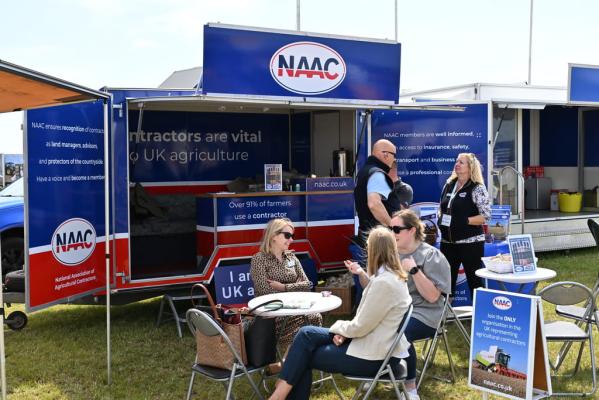
1-1.30pm both days on NAAC Stand 507
Contractors and farmers are invited to join the National Association of Agricultural Contractors (NAAC) at lunchtime for a FREE pie and a pint both days (12.30-2.30pm food and bar) – kindly sponsored by Rural Asset Finance - to hear from a highly esteemed panel of farmers and contractors discussing if and how using a contractor can bring value to the farm business.


Good land drainage is the building
block of productive farming:
Improving:
- Soil structure/health
- Crop yields
- Work rates
- Access onto land
- Water holding capacity
- Soil temperature
Reducing:
- Surface run-off
- Compaction
- Flooding potential
- Waterlogging and blackgrass
- Nitrous oxide emissions
This is an optimal time for farmers to be looking at drainage options as we challenge the devastating impacts of climate change by looking how to offset increases in rainfall with appropriate water management systems. The past few years have highlighted the vital importance of well drained land, showing the positive impact on trafficability, crop growth and yields.
Current drainage systems were installed decades ago and are failing and, as rainfall patterns change, we need to review our drainage to make sure water management is working, sustainable and efficient to optimise crop production, whilst minimising risk from flooding, soil erosion and run-off.
Installation of land drainage requires significant capital investment, and it is important that systems are installed by trained operators who understand the principles of water movement and the technology involved to ensure land managers gain maximum benefit.
Good land drainage is the building block of productive farming.
Farmers should then make time to visit the NAAC Land Drainage hub to visit the NAAC and its drainage members to find out more on what is involved, practicalities and installation of a professional drainage system.
In partnership with

Programme